Is Inflation Going Up Again? Here's What It Means for the San Antonio Housing Market

If you've filled up your gas tank lately or gone grocery shopping, you've probably noticed that everything feels more expensive. Recent economic reports confirm what many families are already experiencing: inflation is moving higher again.

Naturally, many San Antonio home buyers and sellers are asking:

Will rising inflation affect mortgage rates?
Should I wait to buy a home?
Is the housing market headed for another crash?

Let's separate the facts from the headlines.

Why Inflation Is Rising

One of the primary measures economists use to track inflation is called the Personal Consumption Expenditures (PCE) Index. Recently, that number has increased, largely due to higher energy costs driven by ongoing instability in the Middle East.

The good news is that when economists remove volatile energy prices from the equation, inflation is still increasing, but at a much slower pace.

That suggests much of the current inflation spike is tied to global events rather than widespread economic problems here at home.

How Inflation Impacts Mortgage Rates

When inflation remains elevated, the Federal Reserve often keeps interest rates higher in an effort to slow spending and stabilize prices.

While the Federal Funds Rate does not directly determine mortgage rates, it strongly influences the overall lending environment.

What does that mean for buyers in San Antonio?

Mortgage rates may stay higher longer than many experts initially expected in 2026.

If you've been waiting for rates to drop dramatically before purchasing a home, it's important to understand that there is no guarantee they'll drop anytime soon.

This Is Not Another 2008 Housing Crash

One of the biggest misconceptions I hear from buyers is that higher rates automatically mean a housing crash is coming.

The reality is that today's market looks very different from 2008.

Here are a few reasons why:

  • Housing inventory remains relatively limited throughout much of the San Antonio area.

  • Most homeowners have built substantial equity over the past several years.

  • Lending standards are significantly stricter than they were before the housing crisis.

  • Foreclosure activity remains historically low.

  • Today's challenge is affordability, not risky lending practices.

The market may feel challenging, but challenging and crashing are two very different things.

What San Antonio Buyers Can Do Right Now

If you're planning to purchase a home in San Antonio, Schertz, Cibolo, New Braunfels, or surrounding communities, there are still strategies available to help make homeownership more affordable.

Consider:

  • Temporary mortgage rate buydowns, if available
  • Adjustable-rate mortgage options when appropriate

  • Buy now and refinance when rates drop
  • Down payment assistance programs

  • First-time buyer programs

  • Seller concessions to offset closing costs

  • Negotiating incentives on homes that have been on the market longer

In today's market, having the right strategy often matters more than perfectly timing interest rates.

What Sellers Need To Know

For homeowners considering selling, higher rates have not eliminated buyer demand.

People still relocate for military assignments, job changes, growing families, retirement, and life events.

The key is proper pricing, strong marketing, professional photography, and working with an agent who understands today's market conditions.

Homes that are priced correctly and marketed effectively continue to sell throughout the San Antonio area.

Bottom Line

Inflation remains above the Federal Reserve's target, and that means mortgage rates could stay elevated for a while. But that doesn't mean buyers and sellers should put their plans on hold.

The most successful moves happen when people focus on their personal goals and create a strategy that works in today's market, rather than trying to predict tomorrow's headlines.

If you're wondering how rising inflation and mortgage rates could affect your move in San Antonio or the surrounding communities, let's have a conversation. I'll help you understand your options and create a plan tailored to your situation.

Your Home Is My Mission

July 13, 2026

Texas Veterans Land Board: A Texas Benefit Every Veteran Should Know About


If you are a Texas veteran, active-duty military member, National Guard member, Reservist, or surviving spouse, the Texas Veterans Land Board, also known as the VLB, may be one of the most valuable benefits you have never fully explored.

The VLB is a Texas state benefit program administered through the Texas General Land Office. It was created to help Texas veterans and military members with land ownership, homeownership, home improvement options, long-term care, and burial benefits through Texas State Veterans Cemeteries.

For veterans in San Antonio, Bexar County, Guadalupe County, Comal County, and throughout Texas, this program can be especially helpful if your goal is to buy land, build later, purchase a primary residence, or explore acreage outside the city.

What Is the Texas Veterans Land Board?

The Texas Veterans Land Board is not the same thing as a federal VA loan. That is one of the biggest points to understand.

A VA loan is a federal mortgage benefit through the U.S. Department of Veterans Affairs. The Texas Veterans Land Board is a Texas state benefit designed specifically for eligible Texas veterans and military members.

Some veterans may qualify for both programs, but the rules, loan limits, property requirements, and approval processes are different.

In simple terms, the VLB gives qualified Texas veterans and military members another tool in the toolbox when buying land, buying a home, improving a home, or planning for long-term veteran benefits.

The VLB Veterans Land Loan Program

One of the best-known VLB benefits is the Veterans Land Loan Program.

This program allows eligible Texas veterans and military members to finance qualifying land in Texas, usually with a minimum 5% down payment. The land generally must be at least one acre, must be used for non-commercial purposes, and must meet VLB requirements.

Earlier this year, the VLB approved an increase to the standard land loan amount from $150,000 to $200,000. The dual-spouse land loan amount increased from $225,000 to $275,000 for two eligible veteran spouses using the program together.

That means an individually eligible veteran borrower may be able to finance up to $200,000, while two spouses who are both eligible veterans may be able to finance up to $275,000 on the same tract.

VLB Land Sales and Bidding Opportunities

If a bid is accepted, the veteran or military member may apply for a VLB Land Loan. Current VLB land sale information lists a 7.25% interest rate, a 30-year term, and a minimum 5% down payment.

Here is the important part. The VLB will finance up to the minimum bid amount, subject to program limits. If the winning bidder offers more than the minimum bid, that amount above the minimum bid must be paid at closing.

Because interest rates, loan limits, and program terms can change, veterans should always confirm the current VLB terms before submitting a bid or applying for financing.

Who Qualifies for the Texas Veterans Land Board?

To qualify for VLB loan programs, a veteran or military member must generally be at least 18 years old, be a bona fide legal resident of Texas on the date of application, and meet one of the eligible service categories.

Eligible categories may include:

Active-duty military members

Texas National Guard members


Veterans who served at least 90 active-duty days, unless discharged earlier due to a service-connected disability

Certain surviving spouses of veterans whose death was service-connected or who are listed as missing in action

Veterans must generally not have been dishonorably discharged.

VLB Home Loans for Texas Veterans

The Texas Veterans Land Board also offers the Veterans Housing Assistance Program for eligible Texas veterans and military members purchasing a primary residence in Texas.

This program may provide fixed-rate home loan options with terms of 15, 20, 25, or 30 years. Veterans, military members, and eligible spouses may receive up to $832,750 through the VLB home loan program. Veterans with a VA service-connected disability rating of 30% or greater may also qualify for a discounted interest rate.

The home must be the borrower’s primary residence in Texas. The borrower must generally occupy the property within 60 days after closing and maintain it as their primary residence.

For San Antonio military families, PCS buyers, retiring service members, and veterans settling near Joint Base San Antonio, this is worth reviewing alongside other financing options.

Why the VLB Matters for San Antonio Veterans

San Antonio is proudly known as Military City USA, and our area is home to thousands of active-duty service members, veterans, military retirees, and surviving spouses.

That makes the Texas Veterans Land Board especially relevant in our local market.

Whether you are looking for acreage outside Loop 1604, a future homesite in Guadalupe County, land near New Braunfels, a primary residence in Bexar County, or a retirement property somewhere in the Texas Hill Country, the VLB may offer options that many veterans do not realize are available.

As a retired Air Force veteran and San Antonio REALTOR®, I believe veterans deserve clear guidance, straight answers, and someone who understands both the mission and the move.

Common Questions About the Texas Veterans Land Board

Is the Texas Veterans Land Board the same as a VA loan?

No. A VA loan is a federal mortgage benefit. The Texas Veterans Land Board is a Texas state benefit administered through the Texas General Land Office.

Can I use a VLB land loan to buy land in Texas?

Yes, if you are eligible and the land meets VLB requirements. The land must generally be at least 1 acre and used for non-commercial purposes.

How much can an eligible veteran borrow through the VLB land loan program?

The current maximum land loan amount is $200,000 for an individually eligible veteran borrower. Two eligible veteran spouses using the program together may borrow up to $275,000.

What is the minimum down payment for a VLB land loan?

Current VLB land loan information generally references a minimum 5% down payment, but veterans should verify current terms directly with the VLB before applying.

Can I use the VLB if I live in San Antonio?

Yes, if you meet the VLB eligibility requirements and are a bona fide Texas resident on the date of application.

Final Thoughts

The Texas Veterans Land Board is one of the most unique veteran benefit programs in the country. For qualified Texas veterans and military members, it can help open the door to land ownership, homeownership, home improvements, long-term care, and final honors.

For veterans who want to own a piece of Texas, especially land or acreage, the VLB is absolutely worth exploring. For more specific questions about the program, I always rely on  Patrick Fitzgerald, a registered VLB lender with USA Mortgage.

And as always, before making a move, make sure you understand the loan terms, property requirements, closing costs, and how the VLB program compares to your other financing options.

If you are a veteran, military member, or surviving spouse looking at land or homes in San Antonio or the surrounding Texas communities, I would be honored to help you walk through your options.

Your Home Is My Mission



Posted in Market Updates
June 29, 2026

What Is Happening with Home Prices Right Now

You have probably heard people say that home prices are cooling off.

And yes, in some areas, that is true.

But here is the part that often gets missed: real estate is local. What is happening nationally does not always match what is happening in San Antonio, Schertz, Cibolo, New Braunfels, Boerne, or anywhere else in our part of Texas.

Some markets are still seeing price growth. Some have flattened. Others are seeing modest price adjustments. So what is causing the difference?

It comes down to one major factor: inventory.

What Does Inventory Mean in Real Estate?

In simple terms, inventory means the number of homes available for sale.

When there are more homes on the market, buyers have more choices. When buyers have more choices, they usually feel less pressure to rush, compete, or overpay. That can slow price growth and give buyers more negotiating room.

On the other hand, when there are fewer homes for sale, buyers are competing for a smaller pool of properties. That competition can push prices higher, especially for homes that are priced well, show well, and are in desirable areas.

That is the basic supply-and-demand story behind today’s housing market.

And yes, it still applies in San Antonio real estate.

Why Home Prices Are Acting Differently Across the Country

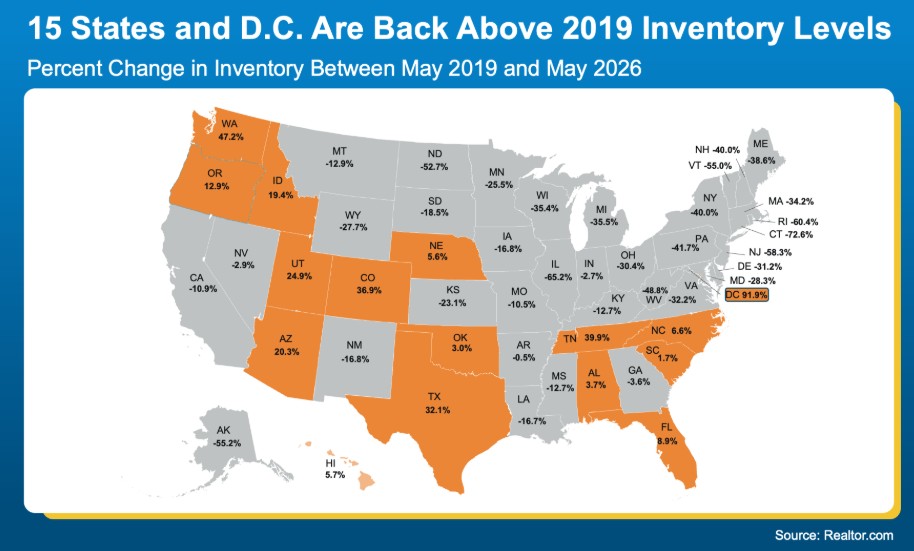
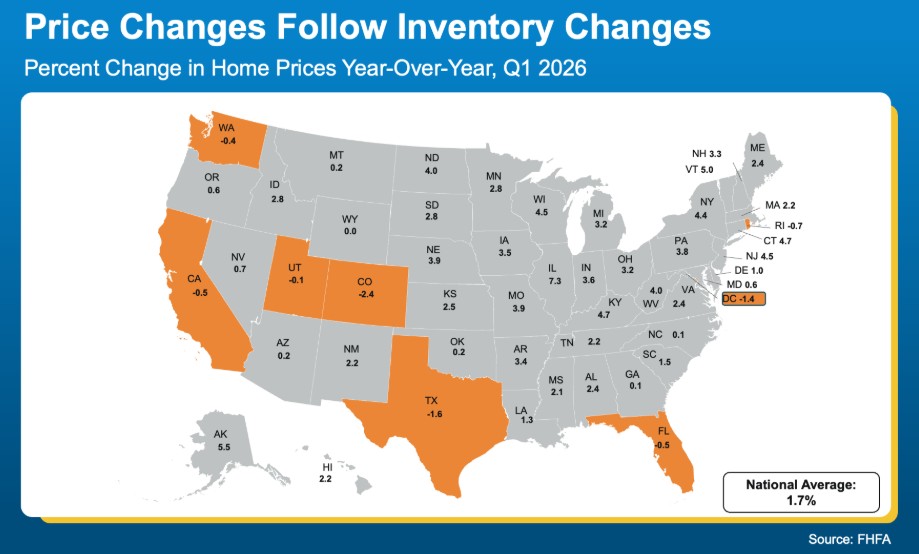
Across the country, some markets now have inventory levels that are back near or even above where they were before the pandemic. In those areas, home prices are more likely to flatten or dip slightly.

That includes parts of Texas, Florida, and Colorado, where more homes are available compared to the extremely tight market we saw a few years ago.

In other parts of the country, inventory is still well below normal. In those areas, prices are generally still rising because there simply are not enough homes to meet buyer demand.

That is why national averages can be misleading.

A national report may say home prices are up slightly, but that number is really a blend of two different stories. Some markets are softening. Others are still moving upward.

The better question is not, “What are home prices doing nationally?”

The better question is, “What is inventory doing in my local market?”

What This Means for San Antonio Home Buyers

If you are buying a home in San Antonio or the surrounding area, inventory matters.

More available homes can create opportunities.

That does not mean every home is suddenly a bargain. It does mean buyers may have a better chance to compare options, negotiate repairs, ask for concessions, or avoid the rushed decisions that were common during the peak market.

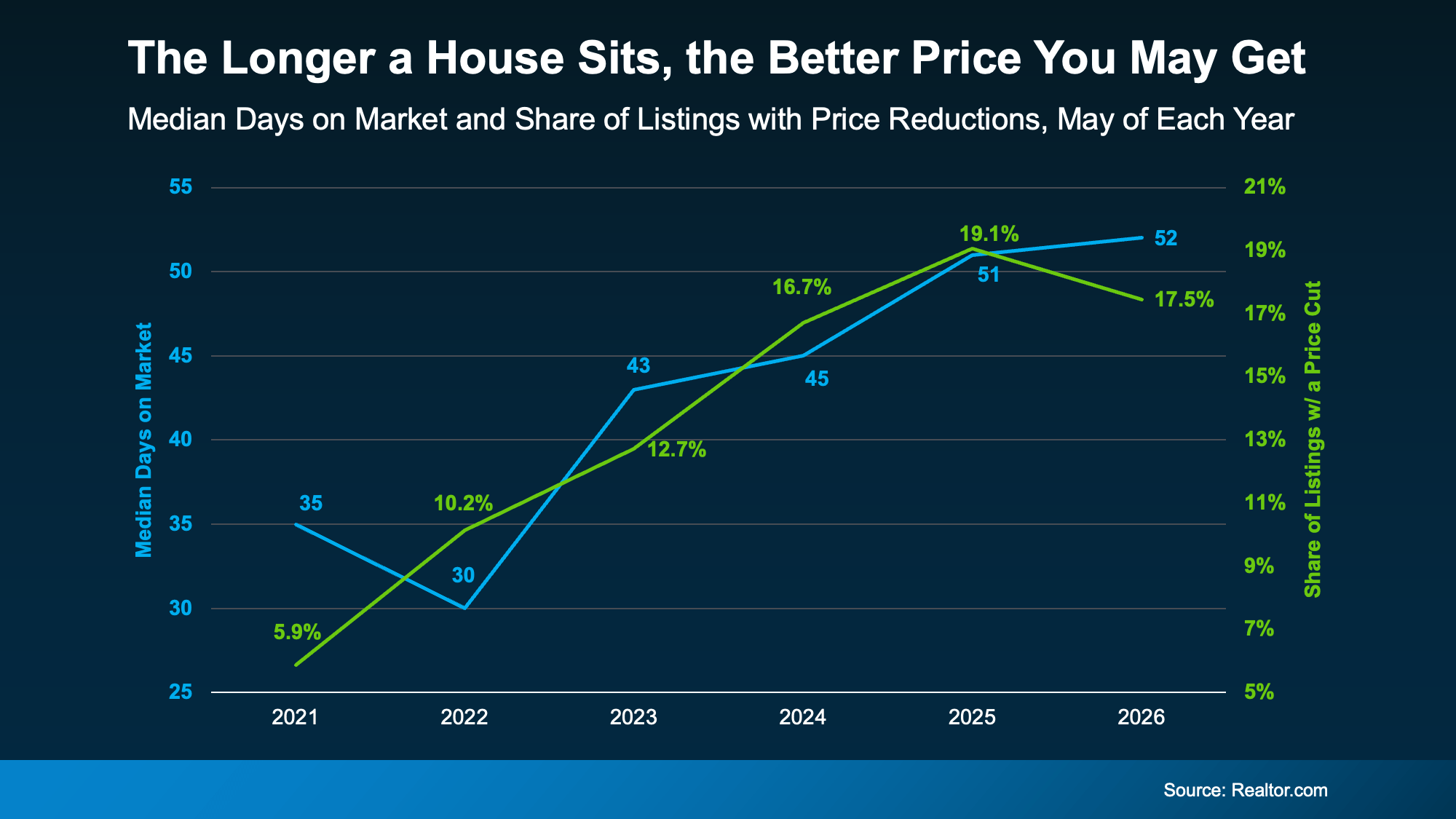
In some price ranges and neighborhoods, buyers may now have more breathing room. That is especially true if a home has been sitting on the market for a while, needs updates, or was priced too aggressively from the beginning.

But let me put my REALTOR hat on for a second: more inventory does not mean you can ignore strategy.

The best homes still attract attention. Well-priced homes in strong locations can still move quickly. If you are using VA financing, relocating through a PCS move, or trying to stay within a specific monthly payment, you still need a solid plan before you start shopping.

That plan should include:

Knowing your budget
Understanding your loan options
Watching days on market
Looking at recent comparable sales
Knowing when to negotiate and when to move quickly

Buying a home in San Antonio is not just about finding a house. It is about finding the right house, at the right price, with terms that protect your interests.

What This Means for San Antonio Home Sellers

If you are selling a home in San Antonio, inventory matters just as much.

When there are more homes for buyers to choose from, pricing becomes critical.

This is where some sellers get into trouble. They look at what a neighbor sold for during a hotter market and assume they can price the same way today. But buyers are paying attention. They are comparing homes, watching price reductions, and taking their time when they have more options.

Overpricing is one of the fastest ways to sit on the market.

And once a home sits too long, buyers start asking questions:

Why has it not sold?
Is something wrong with it?
Will the seller take less?
Can we ask for more concessions?

That does not mean sellers are in a bad position. It just means the strategy needs to fit the current market.

The right list price, strong presentation, clean marketing, professional photos, and realistic negotiation expectations matter more than ever.

As I tell my clients, you do not want to chase the market down. You want to enter the market positioned correctly from day one.

San Antonio Is Not One Single Market

Here is another important point: San Antonio is not one single real estate market.

The market can look different depending on where you are and what price range you are in.

A home in North San Antonio may perform differently than a home in Converse. A property in Cibolo may see different buyer activity than one in New Braunfels. A well-maintained one-story home may get more attention than a home needing major updates. New construction incentives can also affect resale competition in certain areas.

That is why local knowledge matters.

Online estimates and national headlines can give you a general idea, but they cannot replace neighborhood-level pricing, buyer behavior, and local inventory trends.

That is where working with a local San Antonio REALTOR becomes valuable.

Frequently Asked Questions About Home Prices and Inventory

Are home prices dropping in San Antonio?

Some homes may see price reductions, especially if they were overpriced or need updates. However, not every home or neighborhood is seeing the same trend. San Antonio home prices depend heavily on location, condition, price range, and available inventory.

Is this a good time to buy a home in San Antonio?

It can be a good time to buy if you have a clear plan, understand your financing, and know where opportunities exist. With more inventory in some areas, buyers may have more negotiating power than they did during the peak market.

Should I wait for home prices to fall more?

Waiting can be risky because prices, interest rates, and inventory can all change. The better strategy is to focus on your personal budget, monthly payment comfort zone, and the specific opportunities available in your target area.

What should sellers do if inventory is rising?

Sellers should price carefully, prepare the home well, and avoid testing the market with an unrealistic price. In a market with more competition, the first impression matters.

The Bottom Line

The one factor explaining what is happening with home prices right now is inventory.

More homes for sale usually means buyers have more choices and sellers face more competition. Fewer homes for sale usually means buyers compete harder and prices hold stronger.

For San Antonio buyers, this may mean more opportunity and better negotiating power in some areas.

For San Antonio sellers, it means pricing strategy, preparation, and local market knowledge are more important than ever.

National headlines are interesting, but your neighborhood tells the real story.

If you are thinking about buying, selling, relocating, or just trying to understand what is happening in the San Antonio real estate market, let’s build a plan that fits your goals and today’s local conditions.

I’m not just your REALTOR, I’m your resource.

Your Home Is My Mission

Posted in Market Updates
June 22, 2026

Could That Home Sitting on the Market Be Your Best Opportunity?

Why Smart San Antonio Home Buyers Should Take a Second Look at Stale Listings

When searching for homes in San Antonio, Schertz, Cibolo, New Braunfels, or surrounding communities, it's easy to overlook listings that have been sitting on the market for weeks or even months.

Many buyers assume there must be something wrong with the property.

But what if that assumption is causing you to miss one of the best opportunities in today's market?

In many cases, homes that have been on the market longer can offer buyers some of the best negotiating power.


Why Longer Market Time Can Create Better Deals

Affordability continues to be one of the biggest challenges facing home buyers across Texas. Higher mortgage rates and rising home prices have many buyers searching for ways to stretch their budget.

One strategy that often gets overlooked is focusing on homes with longer days on market.

As a home sits unsold, sellers often become more motivated to negotiate. They may be more willing to:

  • Reduce the purchase price

  • Offer closing cost assistance

  • Pay for repairs

  • Provide a mortgage rate buydown

  • Include appliances or other incentives

For buyers, that can translate into significant savings and a more affordable monthly payment.

Why Homes Sometimes Sit on the Market

Before assuming a home has serious issues, it's important to understand that many properties linger for reasons that have little to do with the home's condition.

Common reasons include:

The Home Was Initially Overpriced

One of the most common mistakes sellers make is pricing their home above market value. Buyers pass it by, and the property accumulates days on market until the price is adjusted.

Poor Online Marketing

Today's buyers typically see a home online before they ever schedule a showing.

Low-quality photos, weak descriptions, or limited marketing exposure can cause an otherwise great property to be overlooked.

Increased Competition

In some San Antonio neighborhoods, inventory has increased significantly. Even attractive homes can get buried when buyers have dozens of options to choose from.

How Buyers Can Turn a Stale Listing Into a Great Deal

This is where having an experienced REALTOR® can make all the difference.

Before making an offer, I help my clients analyze:

  • Recent comparable sales

  • Neighborhood trends

  • Days on market

  • Seller motivation

  • Potential repair concerns

  • Available concessions and incentives

If a home has been sitting longer than average, there may be room to negotiate terms that would not be available on a newly listed property.

Sometimes, a seller may not reduce the price much, but they may agree to cover closing costs or contribute toward a mortgage rate buydown. Those concessions can save buyers thousands of dollars both upfront and over the life of the loan.

Don't Let Days on Market Scare You Away

A home that has been sitting on the market is not automatically a red flag.

In today's San Antonio real estate market, it may simply be a hidden opportunity waiting for the right buyer.

Every property has a story. The key is understanding whether the home's longer market time is a warning sign or a negotiating advantage.

That's where local market knowledge matters.

Bottom Line

If you've been struggling with affordability or feeling discouraged by today's housing market, don't overlook homes that have been on the market longer than average.

Some of the best opportunities for San Antonio home buyers can be found further down the search results, where other buyers have stopped looking.

If you're curious about which listings represent genuine value and which ones should be avoided, let's connect. I'll help you identify opportunities, negotiate effectively, and make a confident decision.


Your Home Is My Mission

Posted in Market Updates
June 11, 2026

More Sellers Than Buyers: What It Means for the San Antonio Housing Market

If you've been wondering why some homes are sitting on the market a little longer or why buyers seem to have more negotiating power than they did a few years ago, the latest housing data helps explain what's happening.

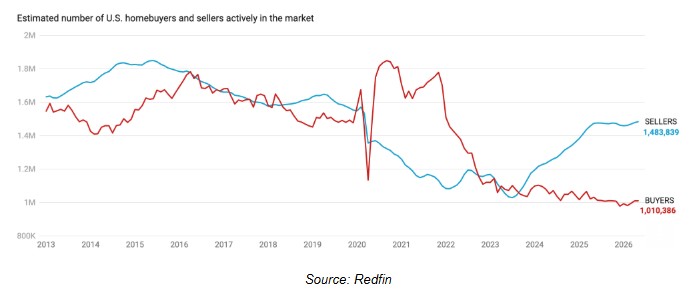
According to a recent Redfin report, there were approximately 46.9% more home sellers than buyers actively in the market during May. That's up slightly from April and represents the largest gap we've seen since 2020. Nationally, there were about 1.48 million sellers compared to just over 1.01 million buyers actively shopping for homes.

Looking at the chart, you can clearly see how seller activity has steadily increased while buyer activity has declined over the past several years. The result is a market where inventory is growing faster than buyer demand.

For Texas homeowners and buyers, this trend is even more pronounced.

Three of the five strongest buyer's markets in the United States are right here in Texas:

  • Austin: 116% more sellers than buyers
  • Houston: 111% more sellers than buyers
  • San Antonio: 108% more sellers than buyers

What does that mean in plain English?

Buyers have more choices than they've had in years. They're taking more time to make decisions, comparing multiple properties, requesting repairs, and negotiating concessions.

For sellers, pricing correctly from day one has never been more important. The days of simply putting a sign in the yard and expecting multiple offers over the weekend are largely behind us. Homes that are well-prepared, properly marketed, and strategically priced are still selling, while overpriced homes often sit and become stale.

Here in San Antonio, we're seeing exactly that. The market remains active, but buyers have options. Sellers who understand current market conditions and position their homes correctly are seeing the best results.

If you're considering buying or selling in San Antonio or the surrounding areas, understanding local market conditions is critical. National headlines only tell part of the story.

A special thank you to my fellow Texas real estate professionals, Hope Teel in Austin and Nimesh Patel in Houston, whose local market insights help paint a broader picture of what's happening across Texas.

As always, if you're wondering what these trends mean for your specific situation, let's talk.


Your Home Is My Mission.

Posted in Market Updates
May 19, 2026

What You Need to Know About 2026 Home Prices in San Antonio

Are Home Prices Going To Crash in San Antonio? Here’s What Buyers Need To Know in 2026

If you’ve been thinking about buying a home in San Antonio or the surrounding communities, chances are you’ve asked yourself this question:

“What if I buy now and home prices go down?”

You’re not alone. Between headlines, social media “experts,” and constant talk about the housing market, many buyers are nervous about making the wrong move. Especially first-time buyers and military families relocating to Military City USA.

But here’s the reality most headlines miss: real estate is a long game, not a short-term gamble.

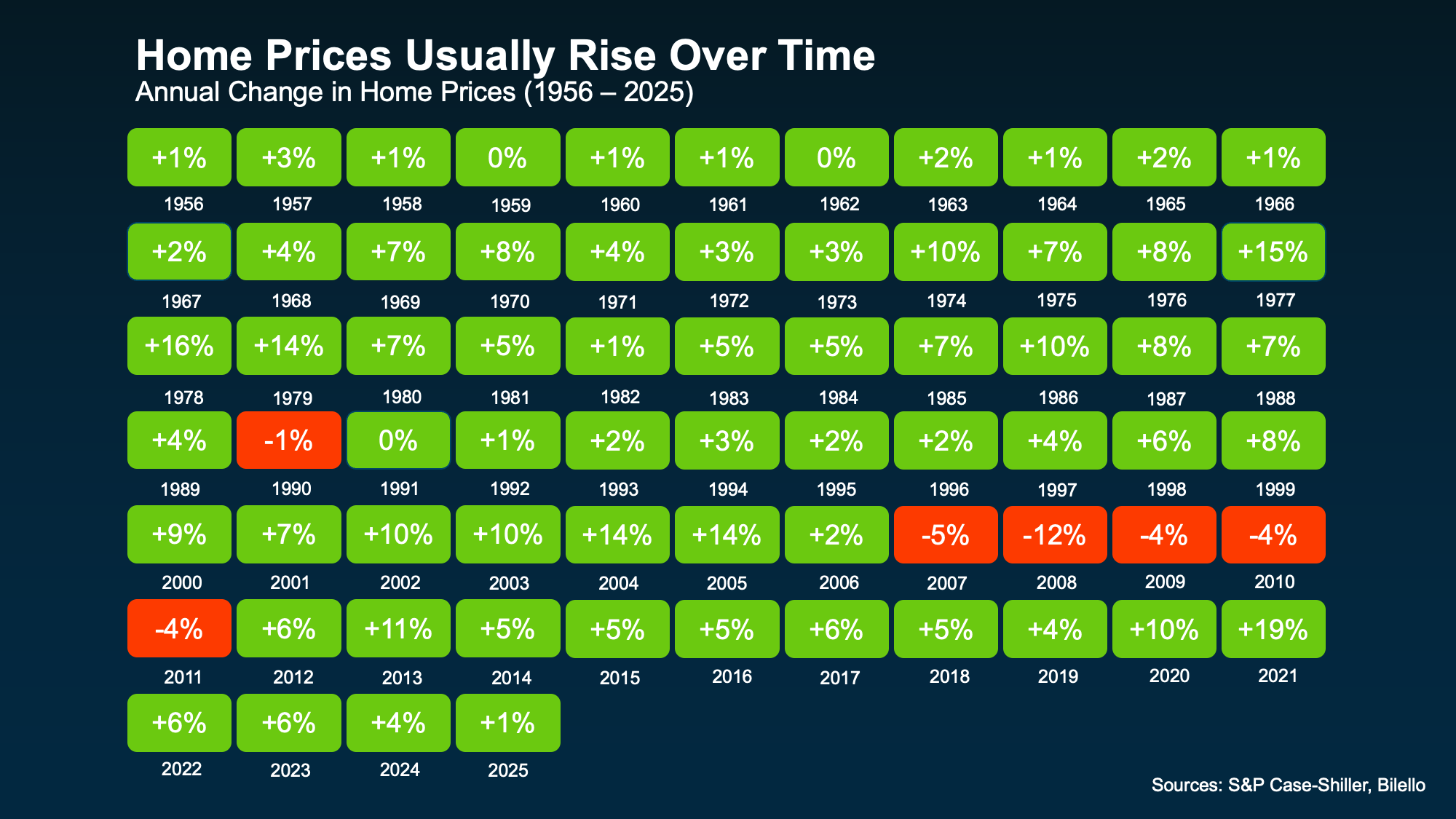
Average home price increases by year

What History Says About Home Prices

When you zoom out and look at the historical data from sources like Case-Shiller and Bilello, one thing becomes very clear:

Home values have consistently increased over time for decades.

Outside of the 2008 housing crash, home prices across the U.S. have generally either remained steady or appreciated year after year since the 1950s. That’s an incredibly strong long-term trend.

Yes, some markets experience temporary slowdowns or slight corrections. That’s normal. Real estate has always moved in cycles. But historically, those dips have been temporary, while long-term appreciation has remained remarkably consistent.

That’s especially important for buyers in the San Antonio market, where continued population growth, military relocation, and job expansion continue to support housing demand.

Why Home Prices Usually Rise Over Time

1. People Will Always Need Homes

Life keeps moving. Families grow. Military members PCS. People relocate for jobs, retirement, or lifestyle changes.

That demand never completely disappears.

As one of the fastest-growing areas in Texas, San Antonio continues attracting buyers from across the country looking for affordability, opportunity, and quality of life.

2. Housing Inventory Still Matters

While inventory has improved compared to the frenzy of the pandemic years, there still are not enough homes available nationally to fully meet demand.

In many parts of the greater San Antonio area, well-priced homes still move quickly because buyers are actively looking for value and long-term stability.

3. Inflation Pushes Prices Higher Over Time

Just like groceries, vehicles, and construction materials increase in cost over time, homes do too.

Real estate has historically been one of the strongest long-term hedges against inflation. That’s one reason many homeowners build wealth simply by owning property over time.

What This Means for Buyers in San Antonio

Trying to perfectly “time the market” is almost impossible.

The better question is this:

“Does buying a home make sense for my life right now?”

If the answer is yes, and you plan to stay in the home for at least five years, history shows you’re far more likely to benefit from long-term appreciation than short-term market fluctuations.

That’s why so many homeowners in San Antonio have steadily built wealth over time through real estate ownership.

And remember, real estate is hyper-local.

Some neighborhoods may appreciate faster than others. Some areas may temporarily level off. That’s why working with a knowledgeable local REALTOR® matters more now than ever.

The Bottom Line

No one has a crystal ball. But history gives us strong clues.

Home prices have a long track record of rising over time, and that’s why real estate continues to be considered one of the safest long-term investments available.

That doesn’t mean you should rush to buy tomorrow. The right time to buy is when it fits your goals, finances, and lifestyle.

But if fear of a market crash is the only thing holding you back, the long-term data should bring some reassurance.

If you’re curious about what’s happening in the San Antonio housing market, surrounding communities, or military relocation areas, let’s connect and build a strategy that works for you.

Top San Antonio Realtor
Your Home is My Mission

Posted in Market Updates
March 16, 2026

If Your San Antonio Home Isn’t Getting Offers, Read This First


If your house in San Antonio isn’t getting offers, it usually comes down to three things: presentation, pricing, or accessibility. In today’s housing market, buyers have more choices than they did a few years ago. That means homes need to be priced correctly, show well, and be easy to tour if you want to attract serious offers.

Recently, online searches for can’t sell my house” hit an all-time high according to Google Trends. If your home has been sitting on the market without offers, you’re definitely not alone.

But here’s the good news: homes are still selling every day across San Antonio, Bexar County, Comal, and Guadalupe Counties. When a listing stalls, it’s usually not the market itself — it’s the strategy.


After helping homeowners throughout San Antonio, Schertz, Cibolo, and the surrounding communities, I’ve seen a consistent pattern. When a home isn’t moving, one (or more) of these three factors is almost always the reason.

1. Presentation: Buyers Are Comparing Everything

A few years ago, when inventory was extremely low, buyers were willing to overlook imperfections. Homes sold quickly, even if they needed updates or repairs.

That’s no longer the case. Today’s buyers scroll through dozens of homes online within minutes. They compare listings side-by-side, looking at:

  • condition

  • lighting

  • flooring and finishes

  • layout

  • updates

  • curb appeal

If a home feels cluttered, dated, or poorly photographed, buyers often skip it before ever scheduling a showing.

The good news is you usually don’t need a full renovation. Often, the biggest improvements come from simple changes like:

  • decluttering and deep cleaning

  • neutral paint colors

  • improving curb appeal

  • fixing small repairs

  • professional real estate photography

First impressions matter again in today’s San Antonio housing market.

2. Pricing: If the Price Isn’t Compelling, It Won’t Sell

This is often the toughest conversation for sellers.

Many homeowners remember what their neighbor’s house sold for during the pandemic housing boom. But today’s market is different.  As economist Selma Hepp of Cotality recently noted:

For sellers, the days of pricing aggressively and expecting instant offers are largely over. Homes that are well-priced and well-presented will still sell, but pricing discipline matters more than it did during boom years.”

Buyers in today’s market are much more budget-consciousIf a home is priced based on past market conditions instead of current San Antonio demand, buyers may still look at it online — but they won’t make an offer.

Pricing correctly from the beginning is one of the most important decisions a seller can make.

3. Access: If Buyers Can’t See It, They Can’t Buy It

This one sounds obvious, but it’s surprisingly common. If showings are restricted to:

  • evenings only

  • limited days

  • 24-hour notice

  • no weekends

You may be unintentionally eliminating a large portion of potential buyers.  In a market where buyers have more homes to choose from, convenience matters. If it’s difficult to schedule a showing, many buyers will simply move on to the next property. The easier your home is to see, the more opportunities you create for offers.

A real conversation with a local real estate expert.

If your home is sitting on the market, ask these three questions:

  • What are buyers looking for in today’s San Antonio market?

  • What feedback are we getting from showings?

  • What adjustments would help generate offers?


Often, small changes can completely change the momentum of a listing.

Posted in Market Updates
Oct. 2, 2025

Welcome to Your Local Real Estate Resource

Welcome to Your Local Real Estate Resource

This website is built specifically for your local market—not a national portal. Whether you're buying, selling, or just exploring, you'll find tools and insights tailored to your community, backed by real people who are here to help.

🔍 Search for Homes in Your Area

Use our Home Search tool to explore listings that match your needs. Filter by location, price, and features to find homes that fit your lifestyle.

👉 Start Your Home Search

📊 Stay Informed with Market Reports

Our Market Reports give you up-to-date insights on pricing trends, inventory, and recent sales in your neighborhood. It’s a great way to stay ahead—whether you're buying or selling.

👉 View Market Reports

💰 Know Your Home’s Value

Thinking about selling? Use our Home Value tool to get a quick estimate of your property’s worth in today’s market. It’s fast, free, and a great starting point.

👉 Check Your Home Value

👋 Talk to a Real Local Expert

This isn’t just a website—it’s backed by real humans who know your area and are ready to help. Visit our About Us page to learn more about your local agent and how they can support your real estate journey.

👉 Contact Us


Thanks for visiting!
We’ll be updating this blog regularly with tips, insights, and local updates. And if you ever have questions, just reach out—we’re here to help.

Posted in Market Updates